





Cockroaches
How to Deal with Cockroaches
 |
|
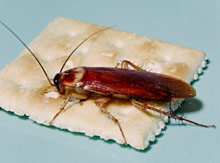
American cockroach. Clemson University - USDA Cooperative Extension Slide Series, Bugwood.org. |
 |
|
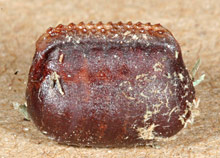
American cockroach egg case. Photo by Gary Alpert, Harvard University, Bugwood.org. |
 |
|
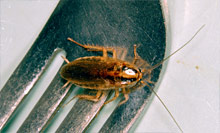
German cockroach. Clemson University - USDA Cooperative Extension Slide Series, Bugwood.org. |
Don’t wait till you see live cockroaches in the daytime—inspect for frass and put out sticky traps in dark corners. These let you know if cockroaches are on the roam.
If you find evidence act now.
Don’t carry them home: Some species are great hitchhikers: check paper bags or boxes. Look carefully—egg cases could be tucked into cracks and folds!
Keep them out: Some of the big ones can wander in on their own from outside. Make sure you have door sweeps on exterior doors and screens on your windows. Inside, cockroaches may move between neighboring apartments along plumbing and electrical ducts. Seal around these entry points to keep them out.
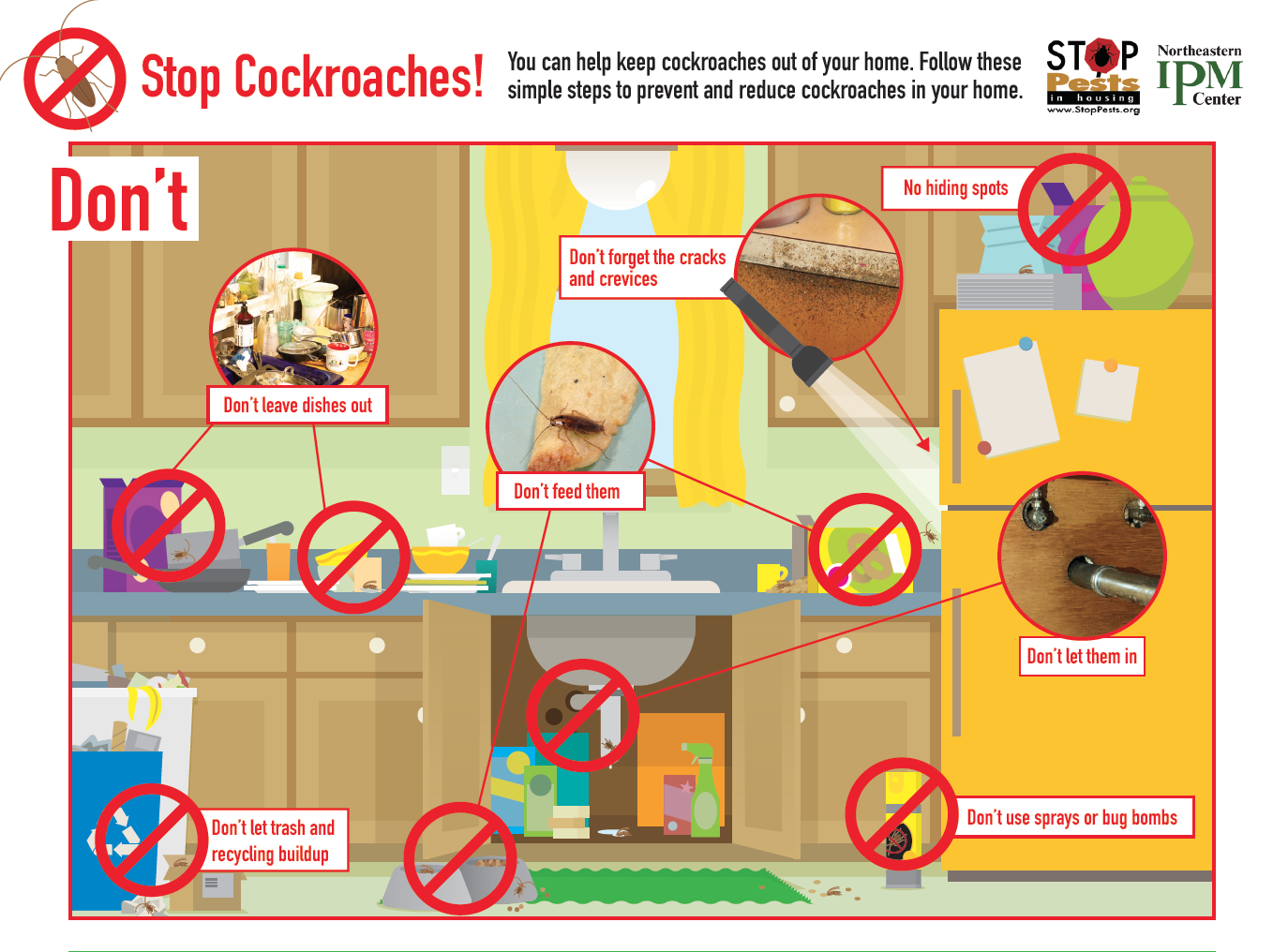
Once inside, cockroaches like to hide in cracks and crevices where it’s dark and warm and there’s food and water nearby. If there is no other way into these spaces, get the cockroaches out, then seal them up.
Give them no place to hide: Say good-bye to clutter! Throw out or recycle cardboard, paper, and boxes of food in your cupboard that haven’t been touched in months.
Don’t feed them: Put food in containers that seal tight. If there’s room, put your pop-tarts, cereal, and whatnot in the fridge or freezer.
Become a clean freak: Clean up right away after you cook and eat. Rinse out bottles and cans. Keep the lid on the trash and take it out before it overflows. Vacuum often, getting up crumbs and dead cockroaches. Wipe the stove, drip trays, and surrounding walls to get splattered grease and cockroach treats. Did you know most stove tops lift up for easy cleaning? Do you leave dishes to soak overnight, or food out for pets? You’ve set up a buffet in your kitchen.
Dry up: Cockroaches like it damp. Call maintenance and have them repair dripping faucets and leaky pipes. Use a dehumidifier to keep humid areas dry. Even sweaty pipes and condensation can quench a cockroach’s thirst. Insulate water pipes and use a fan when you shower.
Each one teach one: Get buy-in from family and neighbors so you all pull together.
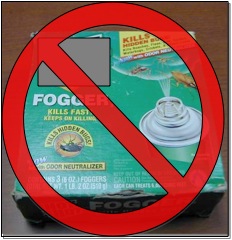 Pesticides: No need for sprays, bombs or foggers. Foggers are dangerous and apply pesticides to all surfaces, except where the pests are hiding. The residents, not the cockroaches, are exposed to the pesticides. These pesticide formulations are no longer our best weapons against cockroaches. Bait in tamper resistant stations work great. Have a professional apply all pesticides. The cockroaches eat the bait and slowly die. But first they go back to their buddies and poop. The friends eat this and get poisoned too. But cigarette smoke, strong-smelling cleaners, or pesticide sprays can ruin the bait. And they’re less likely to take the bait if they have crumbs or spills to eat. Clean up—and be patient. If cockroaches aren’t feeding on the bait, try a different kind.
What they look like
Most cockroaches are oval, flat, and long-legged with long antennae. But they come in several models, so each has its own look. Young cockroaches—nymphs—look like adults, just smaller. Egg cases are the size of pencil erasers and full of eggs—mom sticks them wherever it’s warm . . . sometimes even in the cardboard boxes you bring stuff home in. German cockroaches keep the egg cases protected in their bodies till they’re ready to hatch. So clean up all the dead cockroaches you find.
Where they live
Near where they can get food, water, and warmth. Warmth is especially important which is why you might find them in smoke detectors and other devices with electronic parts. They wedge into cracks by day, waiting for the lights to go out and feast by night. Look for black dots (frass, a.k.a. bug poop) along edges and in corners. Find 'em? Cockroaches are probably hanging out nearby.
What they eat
A crumb on the counter, a drop of grease splattered on the wall—these can feed a cockroach a good while. With a little food and water they will feel right at home.
What they do
Ugh says it all. Allergies, asthma, and food contamination can all be caused or triggered by cockroaches. Cockroaches are a major public health pest. They have no place in your home.
Resources
IPM for Cockroaches: A Property Manager's Guide
 |
|
Use picture-based materials to communicate with residents like the “Stop Cockroaches!” guide pictured above. |
Why do I have cockroaches in my home?
Picture-based Stop Cockroaches! guide for residents. Spanish: Detenga las Cucarachas!
Kansas City MO Public Health resource for residents:
National Pest Management Association's video series
See results from the Northeastern IPM Center’s resources database.
FAQ - About Cockroaches
Are cockroaches attracted to a certain kind of foundation (e.g., cement/concrete)?Are insect growth regulators effective at controlling cockroaches?
Are there albino cockroaches?
Are there any standard treatment measures for roaches, which counteract common or standard treatment measures for mice and rats?
Are there different types of cockroaches?
Do cockroaches drown?
Do cockroaches travel throughout a building?
Do pesticides work on both cockroaches and bed bugs?
Does poor sanitation cause cockroaches?
Have you dealt with turkestan cockroaches in and around the building?
How do I prevent and manage pests in a trash chute?
How do you get rid of a heavy cockroach infestation?
How long can cockroaches survive without food and water?
How long does it take to rid a vacant unit of cockroaches?
How long is the reproduction cycle of the German cockroach?
How long should treatment take for cockroaches?
How often should inspection and monitoring take place between bait placements. How long do they take to work?
Is it true that cockroaches and mice won't exist in the same apartment?
Under what conditions, if any, is spraying necessary for cockroaches?
What are the major obstacles to using IPM for cockroaches?

